
Finbricks. Multibanking with clear data visualization and intuitive back-office tools.
Overview
- Intuitive UX/UI across all applications
- Clear and accessible data visualizations
- Innovative demos of fintech services
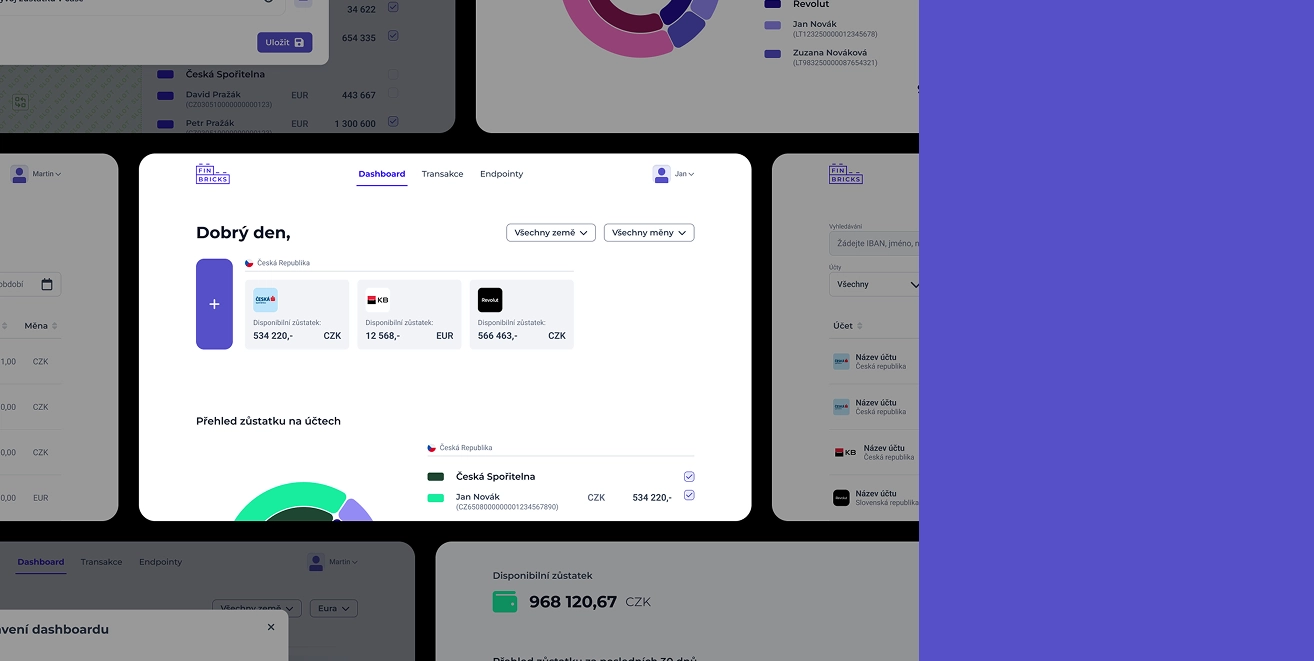
Finbricks provides a showcase multibanking application and a demo version of the Whitebricks payment gateway. The platform is built on a custom backend and supports dedicated back-office applications with a shared frontend framework. These include the Admin Console for client management and the Merchant Portal for merchants using Finbricks services.
Both demo applications allow potential clients to explore the main product, test the payment gateway and provide early feedback.
Business challenges
- Inability to visually demonstrate functionality to clients
- The need for interactive demo applications to support business
- Lack of a tool for market validation and feedback collection
Finbricks couldn’t easily demonstrate the functionality of their solution to potential customers. Although they had a quality backend with innovative features, they lacked a modern frontend.
This absence of representative tools fundamentally limited the business potential and hindered the expansion of their services in the market.

Design challenges
- Lack of UX/UI competencies in the original development team
- The need for an intuitive interface for complex banking operations
- The need for a consistent visual style across applications
The original interface was created in collaboration between internal and external developers without specialized UX/UI skills. This led to complications not only in the visualization of key functions. The main goal was to provide services in the form of redesign, UX/UI improvements, and frontend implementation.
The work consisted of developing the frontend of the Whitebricks demo payment gateway and the Multibank sample application, including the conversion of all key features into a modern interface. This is what makes the platform easy to use and fully prepared for future growth.
Technological challenges
- Complicated integration to specific Finbricks API
- The need for expert data flow optimization for frontend needs
- Lack of technological foundation for scaling
The main technological challenge was integration with the specific Finbricks API, where the data structure from the backend often did not match the requirements for proper frontend display.
This is where we utilized the expertise of our frontend and UX team, technical knowledge of architecture, and close cooperation with the backend team and the client’s product owner.

How we proceeded
- In-depth analysis of API and data structures before starting development
- Close cooperation between UX/UI designers and the client's development team
- Iterative development of a comprehensive multi-bank portal
The collaboration was based on a close connection between our UX and development team and the client’s Product Owner. It was not just about ensuring a clear, intuitive environment with ease of use for all applications. It was a comprehensive process starting with an analysis of the API and data flows.
We then iteratively designed and developed individual digital products. The Whitebricks frontend application, which serves to demonstrate PSD2 payments, and then the Multibank sample application, which clearly visualizes data. This approach also enabled continuous functionality verification.
The solution was to develop a modern frontend for two key applications – Whitebricks and Multibank. These are now used by the sales team to present services and collect feedback.
Technologies used:






Our solution
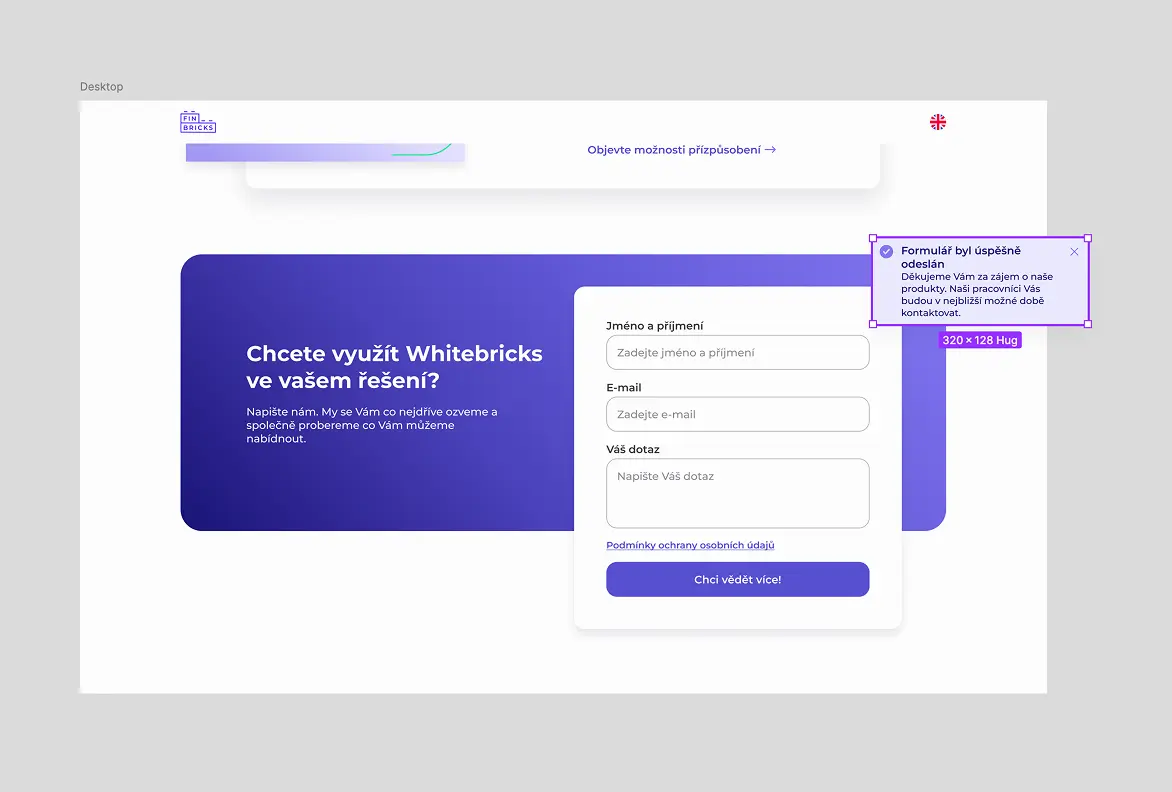
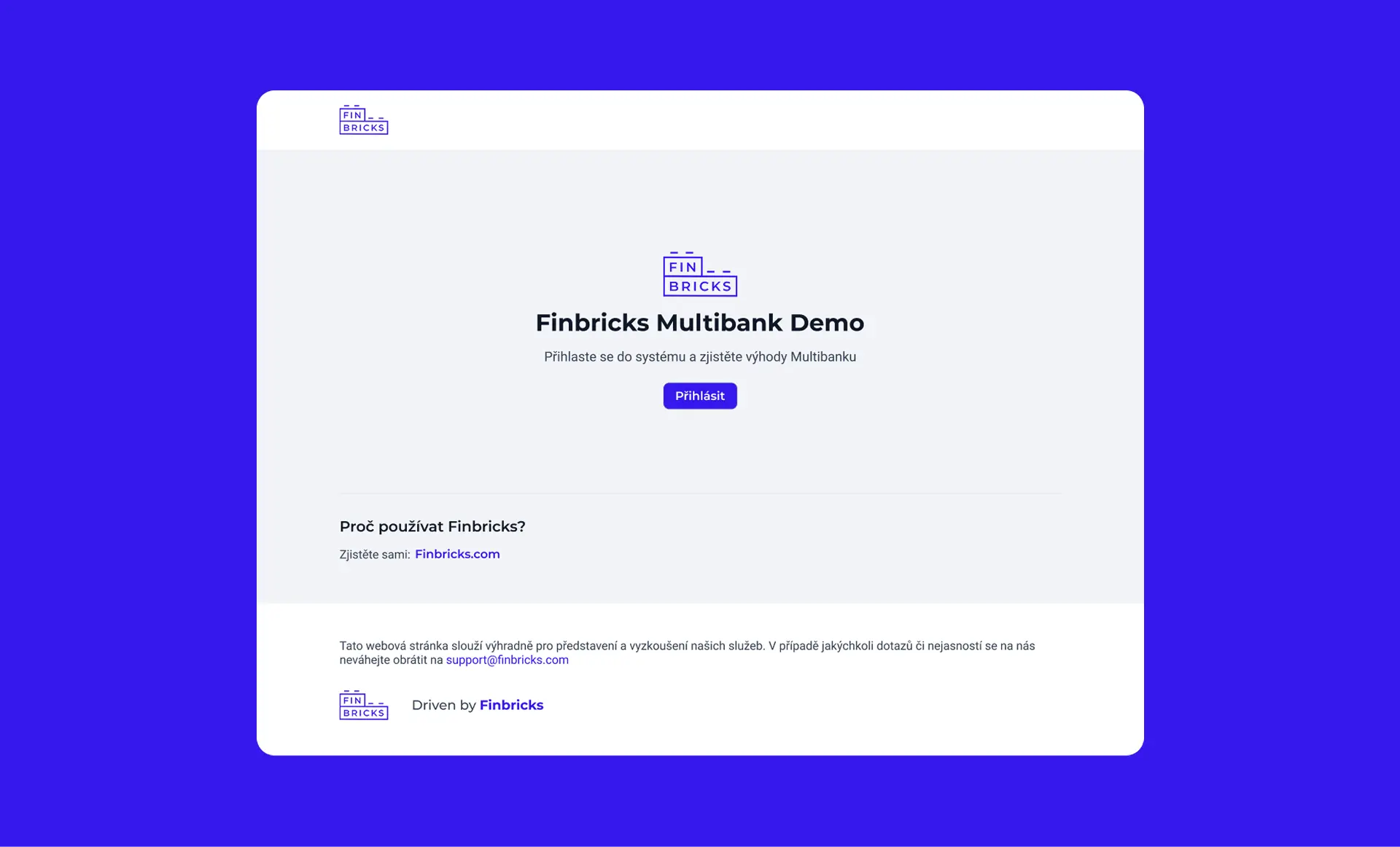
Work began with the demo frontend for Whitebricks which allows potential clients to see how a real payment flow operates.
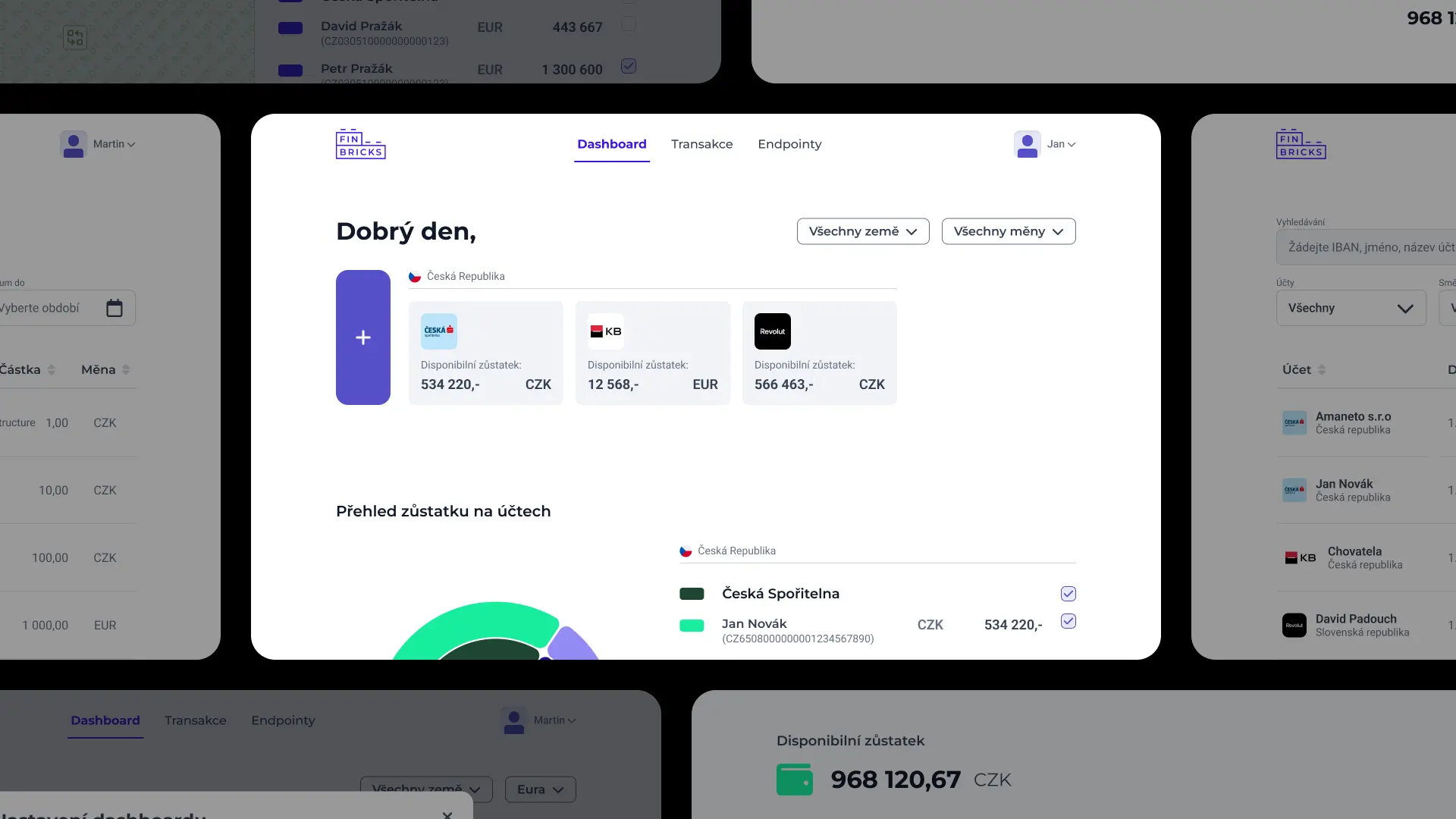
Next came the redesigned multibanking frontend that demonstrates how the future merchant-facing product could look. The interface includes all key features such as cashflow and balance visualizations, frequent counterparties and detailed transaction filtering.
Each application required a redesign, UX improvements, frontend implementation and careful API integration. Close collaboration between our frontend and UX teams, the client’s Product Owner and the backend team ensured smooth data flow and resolved API inconsistencies.
- Whitebricks payment gateway frontend: real-time PSD2 payment demo
- Frontend Multibank application: clear visualization of key functions
- Connection to Finbricks API: optimization of data structure in accordance with the frontend
Impact
- Innovative platform with a unified and modern frontend
- Representative demos of Whitebricks and Multibank applications
- Consistent UX/UI with a stable technological foundation
The result is a cohesive fintech platform with a modern and consistent interface. Users gain a clear overview of accounts and transactions, while administrators benefit from an efficient management environment.
Thanks to the unified UX/UI and scalable architecture, the platform is easy to use today and ready to evolve along with the client’s needs.

Key findings
- A high-quality visual layer is a prerequisite for B2B technology sales
- Frontend and backend must cooperate already during the design of the data architecture
- A functional demo builds trust faster than technical documentation
Experience confirms that even the best backend solution is abstract to the customer until it takes on a concrete visual form. Creating demo applications transformed the “invisible” technology into a tangible business tool that builds trust almost immediately.
Instead of selling visions, the client now has a functional tool in their hands, thanks to which they receive valuable feedback directly from potential customers. This approach not only speeds up business negotiations, but also ensures that future versions of the product develop as the market expects.